



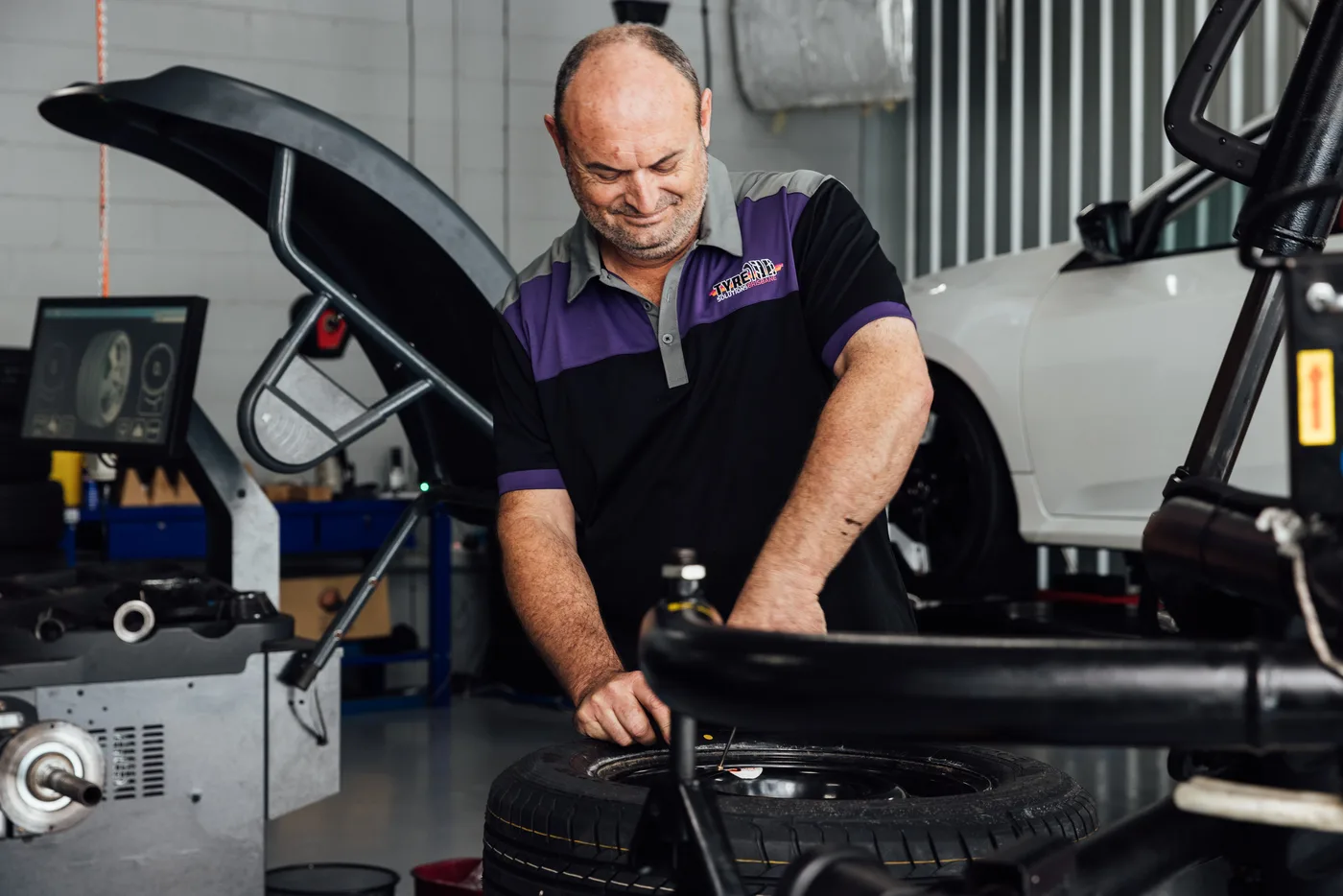
If you’re selling a registered car in Queensland, you need a safety certificate (everyone still calls it a roadworthy or RWC) before you advertise it. The inspection covers the safety essentials: brakes, tyres, steering and suspension, lights, windscreen, seatbelts, structure and leaks. The inspection fee is set by Transport and Main Roads and indexed each year, the inspection takes under an hour, and a pass is valid for 2 months or 2,000 km for private sellers. Bosch Service Brisbane is an approved inspection station across five Brisbane workshops.
When you legally need a safety certificate in QLD
- Selling or disposing of a registered light vehicle (the certificate must be in place from the moment you advertise)
- Transferring registration to a new owner
- Re-registering an unregistered vehicle
- Bringing an interstate-registered vehicle onto QLD registration
What the inspector actually checks
Brakes. Pad and rotor condition, handbrake operation, fluid leaks and pedal feel. Worn brake pads and rotors are one of the most common reasons cars fail.
Tyres and wheels. Minimum 1.5 mm of tread across the face of the tyre, no exposed cords, matched sizes on each axle, and no unsafe damage. Tyres worn heavily on one edge usually mean the wheel alignment is out; fix the cause, not just the tyre.
Steering and suspension. Play in the steering, worn bushes and ball joints, leaking shocks.
Lights and electrical. Every light and indicator working, headlight aim, horn.
Windscreen and wipers. Cracks or chips in the driver’s line of sight, wiper and washer operation.
Seatbelts. Webbing condition, buckles, retractors.
Body and structure. Rust or damage in structural areas, doors and bonnet latching properly.
Leaks and exhaust. Engine oil, fuel, coolant and brake fluid leaks, plus exhaust condition and mounting.
The most common failure points we see
Tyres on the legal limit, worn brake components, blown globes, wiper blades perished by the Queensland sun, oil leaks, and windscreen chips that crept into the driver’s view. Most are cheap to fix if you catch them before the inspection rather than after a failure.
If the car fails
You’ll get a written defect list. You have 14 days to fix the defects and re-present the car to the same station; miss that window and you’re paying for a fresh inspection. We quote any rectification work before touching the car, and because the workshop does the inspection and the repairs, the re-check happens in the same place.
Selling? Buying? Two different inspections
A safety certificate protects the buyer only to the level of “this car meets minimum safety standards today”. It does not look at engine health, transmission behaviour, service history or the expensive stuff. If you’re the buyer, that’s what a pre-purchase inspection is for, and if you’re selling an older European car, getting ahead of overdue servicing makes both inspections easier.
Book a safety certificate at any of our five Brisbane workshops, with same or next day slots available.